
Galvanized welded wire mesh can be specified for wall plaster, render, and light construction reinforcement where a project requires a rigid square-grid metal mesh fixed to a wall substrate before a cementitious coating is applied. The product is formed from straight galvanized steel wires welded at regular intersections. It is different from fiberglass mesh, expanded metal lath, and the heavier welded reinforcement panels normally used inside concrete slabs.
For an accurate quotation, a buyer should describe the intended wall system instead of requesting only “plaster mesh.” The substrate may be masonry, concrete, blockwork, or another approved background. The mesh opening, wire diameter, sheet or panel size, galvanizing, fixing method, overlap, and final coating system all affect whether a particular welded mesh specification is suitable for the work. The project drawing and local construction requirements should take priority over a generic mesh description.
Where galvanized welded wire mesh fits in a wall system
Wall plaster reinforcement mesh is commonly considered where the coating system needs a metal grid held securely against a prepared substrate. It may be used in selected render, plaster, repair, and light construction applications when the project design calls for welded steel mesh. The mesh should be installed in accordance with the approved wall system and the responsible contractor's requirements; it is not a substitute for structural reinforcement design, waterproofing, expansion-joint design, or a specified facade system.
The galvanized welded wire mesh for internal and external wall reinforcement product page is the direct product reference for this application. It is intended for enquiries that need the opening, wire diameter, finished sheet or panel size, galvanized finish, overlap requirement, quantity, packing, and destination reviewed together.
Do not confuse wall plaster mesh with slab reinforcement mesh
Although both products may be made from welded steel wires, wall plaster mesh and concrete reinforcement mesh serve different construction purposes. A wall mesh order is normally evaluated around the coating system, substrate condition, panel handling, fixing points, and transitions around openings. A concrete reinforcement panel is selected against an approved structural reinforcement schedule and slab or road design. The wire size, opening, rigidity, panel format, and delivery requirements can therefore be very different.
Buyers planning a slab, roadway, or structural concrete order should review the welded reinforcement mesh panels for concrete slabs guide rather than treating a wall plaster mesh as an interchangeable product. For wall render work, the inquiry should identify the wall area, substrate, finish coat or render system, required mesh placement, and the specification required by the project.
Confirm the opening and wire diameter as a pair
Mesh opening and wire diameter should be stated together. The opening describes the square grid, while wire diameter affects the mesh weight, stiffness, handling, and the way the sheet sits against the wall. Two meshes can have a similar appearance but perform differently because they use a different wire diameter, welded-joint condition, or panel format. Do not rely on a product photo alone when ordering material for a defined wall system.
Ask the buyer or project team to provide the required opening, wire diameter, material, coating, and finished dimensions for each item. If the project refers to a particular standard, drawing, wall-system supplier instruction, or approved sample, include it in the RFQ. This gives the supplier a practical basis for confirming whether the requested mesh is available and how it should be packed.
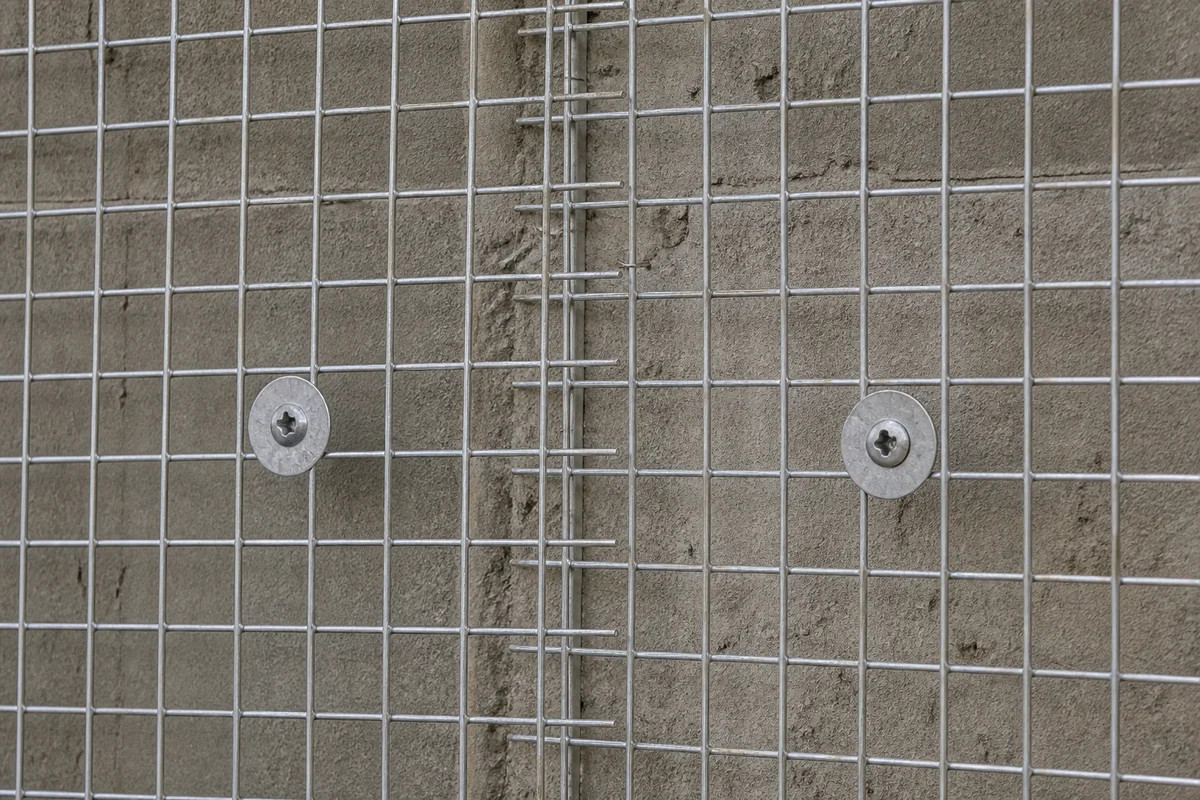
Galvanizing, storage, and wall exposure
Galvanizing is used to provide a zinc coating on steel wire, but the requested finish must still match the intended service environment and construction sequence. A buyer should state whether the work is internal, external, sheltered, exposed, or part of a specific render system. The relevant project parties should decide the complete wall build-up, including substrate preparation, moisture control, coating materials, and corrosion protection requirements.
Before installation, keep mesh sheets or panels dry, supported, and separated from standing water or wet ground. Handling damage, prolonged wet storage, contamination, and incompatible materials can affect the condition of a galvanized surface. The supplier can provide the specified product and packing, while the receiving and installation teams should inspect the material condition, dimensions, and labels before it enters the work area.
Plan fixings, overlaps, and transitions from the drawing
Fixing type, fixing spacing, sheet overlap, and treatment at corners or openings should be taken from the approved project detail. The mesh needs to be held firmly in the intended position without loose edges, unsupported areas, or arbitrary changes to the system. A building with doors, windows, service penetrations, changes of substrate, or irregular wall geometry will often need separate panel measurements and clear site instructions.
For a clean quotation, list each panel or sheet reference separately where multiple sizes are required. Include the quantity, finished dimensions, opening, wire diameter, galvanized finish, intended wall area, and whether edge trimming or special packing is needed. This is especially important when one shipment combines wall mesh with other construction products. The construction reinforcement mesh category provides the broader product context, but the final order should remain tied to the specific wall application and approved specification.
Inspection points before packing and shipment
Inspection should focus on the confirmed order details: finished dimensions, opening, wire diameter, welded-joint appearance, surface condition, mesh flatness, quantity, and packing. Where the buyer needs evidence before shipping, request measurement photographs, quantity marks, bundle or pallet photographs, and packing-list references. Agreeing these checks before production or dispatch helps the buyer compare the delivered product against the purchase specification.
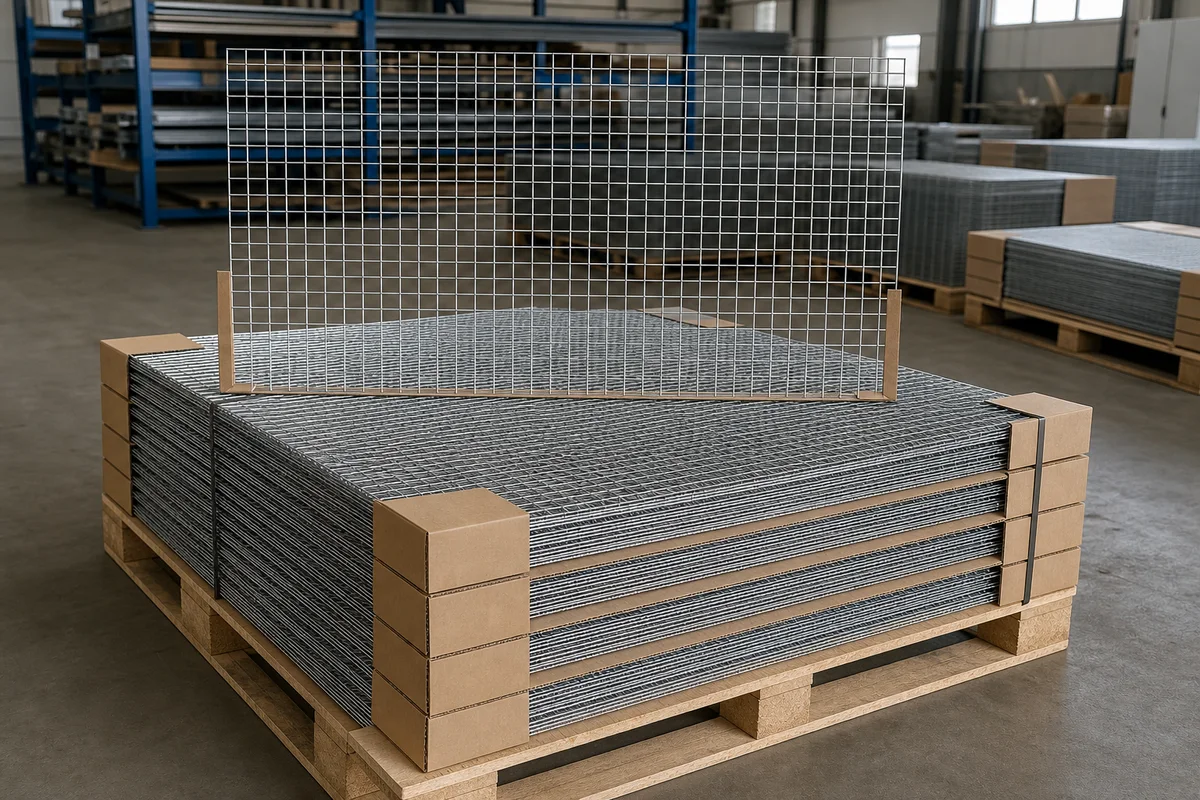
Packing for flat mesh sheets and mixed sizes
Flat welded mesh can be supplied as sheets or panels according to the confirmed product format. For export handling, stacks should be secured to reduce movement, with separators or edge protection where required to reduce abrasion and deformation. If the order contains different openings, sizes, or wall references, each bundle should be labelled clearly so that warehouse and site teams can identify the intended item without opening every stack.
The welded wire mesh specification guide is useful for organising basic mesh data such as opening, wire diameter, finish, dimensions, quantity, packing, and destination. For this product, add the wall substrate, plaster or render system reference, required panel layout, and any drawing or installation detail to make the inquiry project-ready.
RFQ checklist for wall plaster welded wire mesh
- Application: internal wall, external wall, plaster, render, repair area, or other light construction work.
- Wall substrate and the relevant project drawing or approved system detail.
- Galvanized steel wire requirement and any specified coating standard.
- Opening size, wire diameter, welded mesh format, and finished sheet or panel dimensions.
- Panel quantity, overlap requirement, edge trimming, and fixing arrangement as specified by the project.
- Requested inspection evidence, packing method, labels, destination, and container-loading requirements.
Send the product specification, wall-system drawing, mesh opening, wire diameter, finished dimensions, quantity, packing request, and destination through the Anping Mesh Factory contact page for a quotation based on the actual project requirement.